The Philosophy of Footsteps: Rediscovering the Rhythm of "Dynamic Meditation" amidst the Chaos



Translated by AI
In today's efficiency-driven society, it seems our feet have been reduced to a single function: motion. We walk to commute, to hurry, even to burn calories. But what significant aspect is lost among our hurried strides? When walking becomes merely a "method of displacement," our minds often fixate on past worries or rush toward future anxieties, causing a disconnect between body and mind, turning strides heavy and mechanical.
From "Motion" to "Strolling"
In the nineteenth century, American naturalist Henry David Thoreau critiqued this utilitarian approach to walking in his classic book, "Walking." He introduced an intriguing concept—the "Saunterer." The term supposedly originates from medieval pilgrims traveling to the Holy Land (Sainte Terre). For Thoreau, walking should not aim to reach any worldly goal but should be a sacred pilgrimage, a process where the soul returns to nature and essence.
Thoreau famously stated, "If I do not spend at least four hours a day walking in the woods, hills..."
Dynamic Meditation: Practicing Mindfulness While Walking
How can Thoreau's philosophy be applied in modern life? It lies in incorporating "mindfulness" into our stride, engaging in "dynamic meditation."
Many mistakenly assume that listening to podcasts for new insights or mentally arranging tasks while walking optimizes time. However, this depletes energy. Genuine "effective walking" requires redirecting attention from chaotic thoughts to anchor "the present" as the sole focal point.
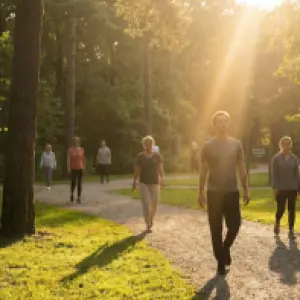
Next time you take a walk, try this exercise: First, become aware of your foot contact. Feel the instant your heel meets the ground, how gravity shifts to the sole, then pushes off with the toes. Sensing the solid support beneath can impart a robust sense of security and grounded stability.
Subsequently, focus on the synchronization between your breath and steps. There's no need to consciously control breathing; simply observe it. Discover your pace; perhaps it’s three steps per inhale, three steps per exhale. As attention centers on these minute physical rhythms, mental noise gradually diminishes, entering a clear and fluid state.
Nietzsche's Insight: Thought Arises from Movement
This clarity achieved through bodily motion is precisely the state philosopher Nietzsche esteemed. He proclaimed in "Twilight of the Idols," "All truly great thoughts are conceived by walking."
Nietzsche held that prolonged sitting induces thought stagnation and guilt, whereas only moving feet enable the flow of ideas. Scientific findings concur: Rhythmic steps stimulate the brain to release endorphins and serotonin, leading it into a relaxed, focused alpha-wave state. In such conditions, habitual thinking patterns often dissolve, resolving longstanding dilemmas.
Find Your Unique Rhythm
Next time you walk, endeavor to put away your phone, remove your earphones. Avoid rushing; strive to be a Thoreau-inspired "Saunterer." On this journey, there are no supervisors, messages, or expectations—just the authentic connection between you and the earth.
This practice supports physical well-being, but more importantly, it helps us find a peaceful rhythm in this cacophonous world, reshaping a complete self through mindful walking.
文章發布於