The Watchman at the Threshold


Translated by AI
Sometimes, I suspect that the world I perceive is not the same one others see.
Where some hear the sounds of traffic as mere background music, I hear a deafening cacophony; where some can relegate a child’s cry to the back of their minds, I find myself unable to let it go.
Is it that I am too sensitive? Is it simply that I lack the ability to focus? or do I actually have ADHD?
I have entertained these thoughts. That is, until one day, while reading through materials provided by a colleague, I stumbled upon a term: the Reticular Activating System, or RAS. It is a system buried deep within the brainstem—silent, unstated, yet it is the decisive force determining what you see, what you hear, and what you ignore each day.
You believe you are free, but in reality, it is this person—this invisible gatekeeper—who curates the world for you today.
And so, I began to imagine what kind of existence he leads.
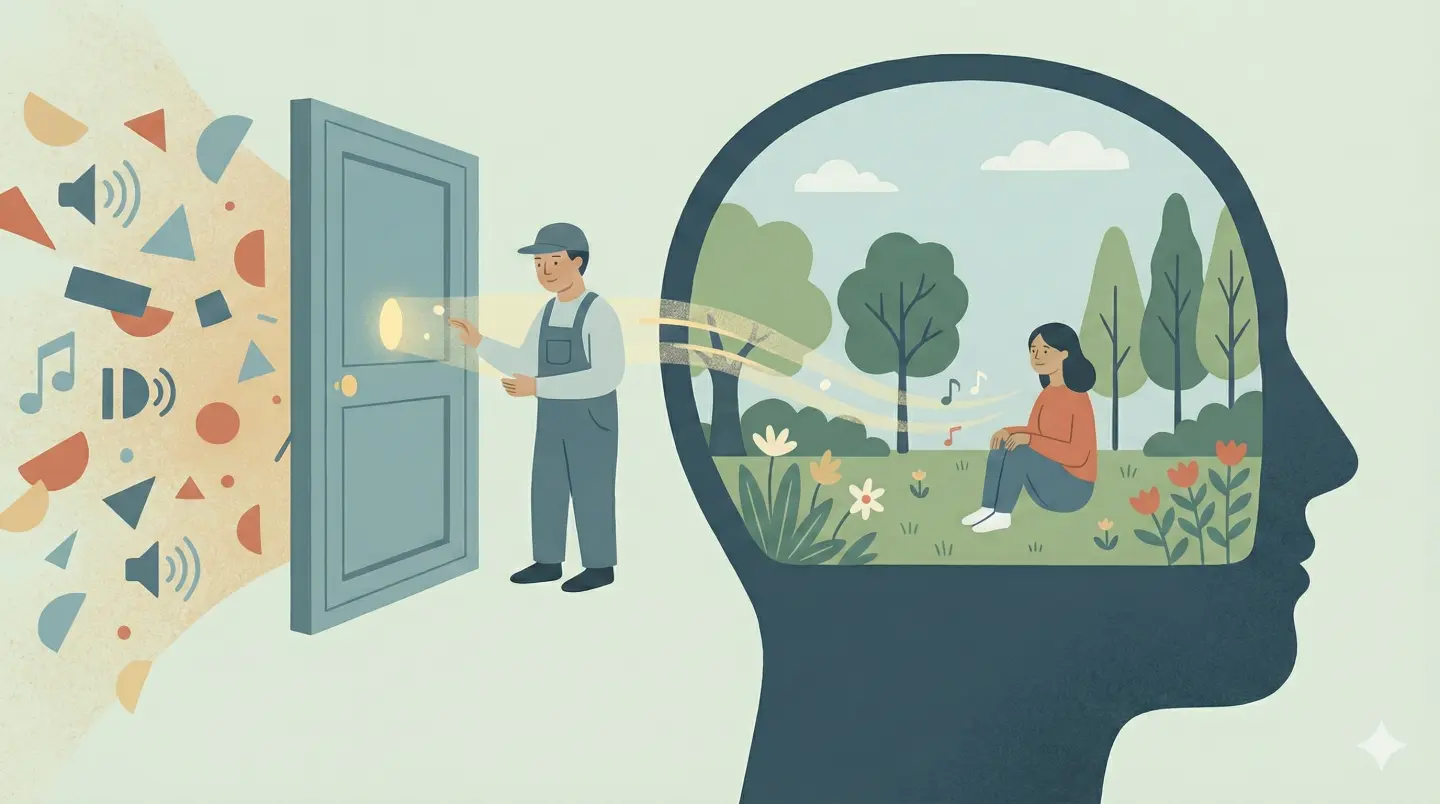
The watchman guarding behind the door perhaps wears unassuming work clothes. Long before I wake, he is already preparing the day’s scenery for me. He knows what I cannot bear today, so he mutes certain noises in the news; he knows what is churning within my heart, so he amplifies a specific phrase, causing a single sentence in a conversation to sting.
He is neither enemy nor friend. He is like a mechanism executing a precise internal algorithm, only this mechanism is symbiotic with my very life.
He ensures that when I walk, I am not distracted by every falling leaf; when I wait at a street corner, I do not fixate on every furrowed brow of every passerby. He helps me shrink the world, compressing it into a volume I can handle in the moment. It is like a photograph with a shallow depth of field—where only one focal point is rendered clear.
But when he grows weary, everything begins to spiral out of control.
I have been in that state.
In the dead of night, lights become piercing; every sound feels like a needle pricking the ear. The sound of a neighbor closing a door a bit too firmly is enough to trigger a minor internal collapse. It feels as though a floodgate in my mind has broken open; thoughts rush in all at once, washing away any trace of sleep. Every triviality is magnified—irritation, tension, and anxiety all scramble to the surface.
It was then that I realized: this person, he gets tired too. He is not a line of code that runs flawlessly forever; sometimes he scrambles, he errs, he short-circuits. When the world suddenly feels too vast, it is not because the world has changed, but perhaps because my watchman has lost his order.
I used to blame him.
I blamed him for letting my mind wander during important moments, for making me forget the things I desperately wanted to remember, for causing me to lose my judgment the moment emotions surged. But later, I discovered the problem was not him. The problem was my conception of "control."
I thought that if I were strong enough, if my will were firm enough, I could dominate my own attention.
But this way of thinking is like scolding a friend who is helping you carry a heavy load: "Why aren't you moving faster?"—while forgetting that he has been silently bearing the weight all along, and you have never given him a moment to breathe.
So, I learned to shift my perspective.
Instead of spiraling into "Why can't I focus?", I ask: "Have I given my RAS enough space today?"
Instead of analyzing "Why am I so irritable?", I consider: "Have I left all the doors to the world wide open, forgetting to help him shut a few for a while?"
This shift is not escapism; it is a practice of redistributing one's gaze.
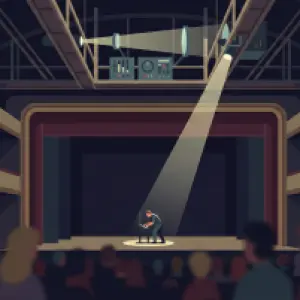
It is like rearranging the lighting in a theater: not forcing everyone to stand in the spotlight, but knowing when to leave a patch of shadow.
If the world is indeed a stage, then when the set changes, when the lights dim or flare, and where the actors stand—these are things never entirely within my control. I am willing to admit this. This is not fragility; it is a softness that coexists with wisdom.
That person guarding behind the door—I no longer view him as an obstacle. I have begun to practice cooperation.
When I learn to care for him, I am learning how to steward myself.
If you are currently feeling overloaded or besieged by the noise, simply stop. Take a deep breath. Not to return to some standard of being "normal," but to ask yourself: "Is all of this happening because I haven't given him a signal to rest for too long?"
The gatekeeper is no stranger. He is you.
He is simply the version of you standing on the other side of the door, who has remained unseen all along.
文章發布於