The Curator of Reality


Translated by AI
In the common understanding of our daily lives, focus is often regarded as a capability, or even a moral trait of character: the disciplined man possesses the power to concentrate; the undisciplined man is prone to distraction. Yet, if we return to the texture of actual experience, this explanation feels insufficient. We have all known those moments when, even without the intrusion of strong emotions or the clamor of the outside world, our attention behaves like a loose thread—unspooling at the slightest sound, a shifting shadow, or a passing thought.
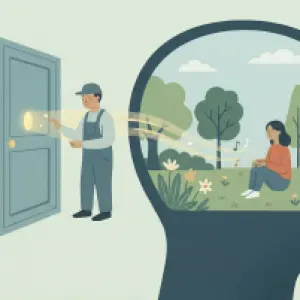
This phenomenon is not a defect of character, nor is it a breach in the will. It is the natural operation of a physiological mechanism deep within the brainstem. It governs our state of arousal, prioritizes sensory input, and determines the depth of our conscious reach. While science calls this the Reticular Activating System (RAS), here, I prefer not to view it through the cold lens of anatomy, but to understand it as the "Curator of the Entrance." It is a mechanism that stewards the gateway to our perception; every signal from the outside must pass through its sieve before it can become the reality we ultimately perceive.
I. Attention Faces the "Curated World," Not the Raw World
We do not touch the raw texture of reality directly. The world’s sounds, lights, contexts, and emotional threads are far too vast for our consciousness to hold all at once. Therefore, before our awareness can arrive at these messages, a mechanism must first "curate" the scene: deciding which signals are granted entry, which must be delayed, and which are dimmed or barred at the gate.
The essence of attention lies here: it is not that we actively decide what to focus on, but that this Curator decides for us what can be focused on. In other words, focus is not a starting point; it is a result. This explains why, no matter how hard we try, attention sometimes refuses to obey—because the one truly controlling the aperture of the passage is the mechanism itself.
II. The Formation of Focus: A Symphony of Senses, Arousal, and Meaning
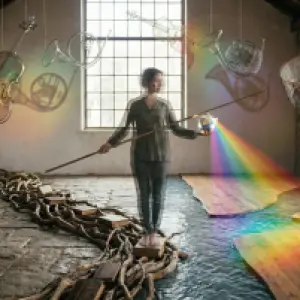
When a person enters a state of deep concentration, it is not because their heart has suddenly grown strong, but because a series of cooperative actions has taken place within the gallery of the mind:
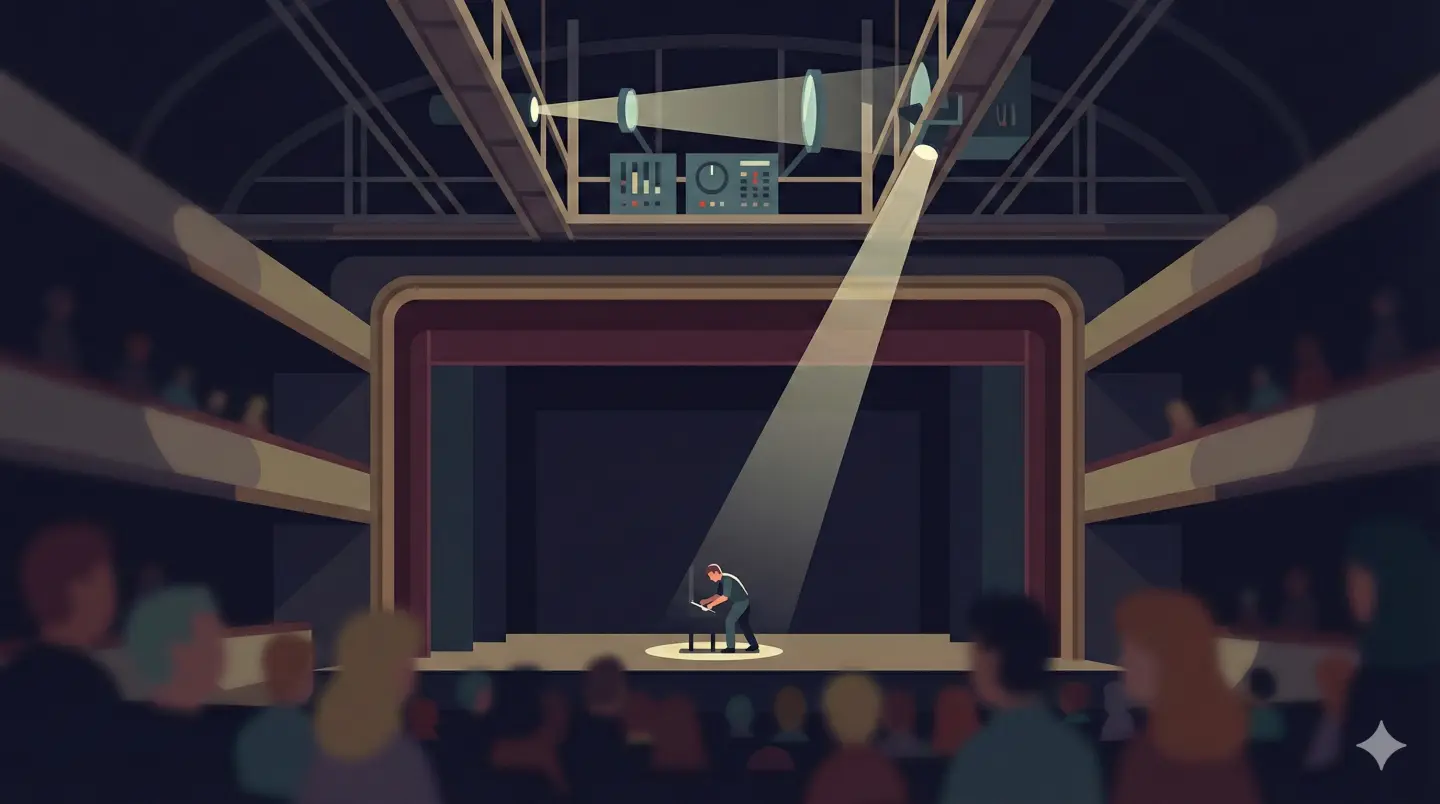
The Narrowing of the Aperture: The minor noises, dim lights, and background static of the world are automatically lowered, like dimming the house lights in a theater.
The Stabilization of Arousal: The energy distribution at a physiological level is maintained within a range suitable for the cognitive task at hand.
The Foregrounding of Purpose: Information relevant to the task is pushed to the front of the stage, becoming the central exhibit for consciousness to grasp.
These processes are not determined by sheer will; they are closer to the generation of a "field" that we co-create with the Curator. In this field, parts of the world are faded into the background, while others are illuminated. This is what the "Life Intern" framework emphasizes: the subject does not conquer the world by force, but moves in alignment with the mechanism of its unfolding.
III. When the Curator is Overwhelmed, the Exhibition Becomes Too Bright
If this mechanism is thrown into disarray by stress, fatigue, lack of sleep, or an excess of information, the curated world ceases to operate as designed. The most typical phenomenon is overload—lights become piercing, sounds amplify, and thoughts rush in too fast, as if the lighting control on a stage has failed, illuminating every corner of the set at once. In these moments, we often mistakenly ask: Why have I become so easily triggered? Am I not strong enough? Am I just too sensitive?
But in truth, this has nothing to do with character. It merely reflects that the Curator cannot temporarily keep pace with the volume of the influx; the light and sound of the stage have lost their arrangement. When the world rushes in all at once, it is not that the subject is weak, but that the stage requires a reset. This is a key concept of the "Life Intern": Do not mistake the state of the mechanism for a flaw in your soul.
IV. Misinterpretation: Confusing "Imbalance" with "Incompetence"
When we are unaware of how this architecture functions, we easily adopt a language of self-condemnation: "I can't do this well." "I'm not focused enough." "I'm too easily swayed." "Is my ability lacking?"
But from the perspective of the mechanism, these sentences do not point to the true cause. The real issue is not an inability to perform, but that I am currently receiving the world in an unstable manner. A more accurate, and gentler, expression would be: "My system requires reorganization." This is not to teach you to evade responsibility, but to share how to avoid placing the weight of responsibility on the wrong shoulders.
V. The Shift in Perspective: From Blame to Understanding
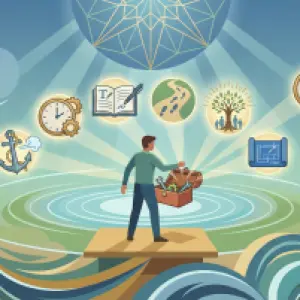
Within the "Life Intern" framework, we can reposition ourselves. We are neither victims pushed around by the tide of the world, nor are we omnipotent masters who control it. We exist somewhere in between—working in tandem with the Curator.
Once you understand how the mechanism works, you can attempt this shift in thought:
I do not need to push harder; I need to restore the conditions that allow the system to function.
I want to return to a position where I can cooperate with the world, rather than constantly fighting against it.
This shift grants us a profound realization: only after we are restored can we choose, once again, how to stand within the world.
VI. Reclaiming the Seat: Adjusting the Relationship, Not the Self
When I realize that focus is a collaboration within a field, my way of acting changes. We can begin to set the rhythm, rather than forcing all speeds to match. By reducing the number of messages processed simultaneously, I am stabilizing my attention. I give the Curator time; I do not force him to be perfect immediately. These adjustments are not merely strategies; they constitute a movement in our stance: moving from the seat of the harsh judge to a position where we co-generate reality with the world.
This is a new way of participating.
文章發布於