Performative Honesty: Emotional Depletion in the Age of Social Media


Translated by AI
In today's world, people have become adept at presenting emotions.
They know which filter accompanies sadness and what tone conveys happiness,
when to post stories, and how many spaces to insert in a post title,
making it appear just right—authentic, controlled, yet not awkward.
They still remain honest, but that honesty has evolved into a performance.
It is no longer about clumsy confessions but rather designed displays.
Emotions are no longer spontaneous; they are crafted.
Sadness is softened, loneliness given texture,
and even suffering demands aesthetics.
Thus, everyone becomes a miniature creator.
They cast, frame, and adjust lighting for their lives.
Emotions once difficult to articulate
are transformed into audience-friendly versions—
not entirely real, but not entirely false either.
Yet these emotions often become light
as what is truly expressed is a desire to be "seen,"
not necessarily a need to be "understood."
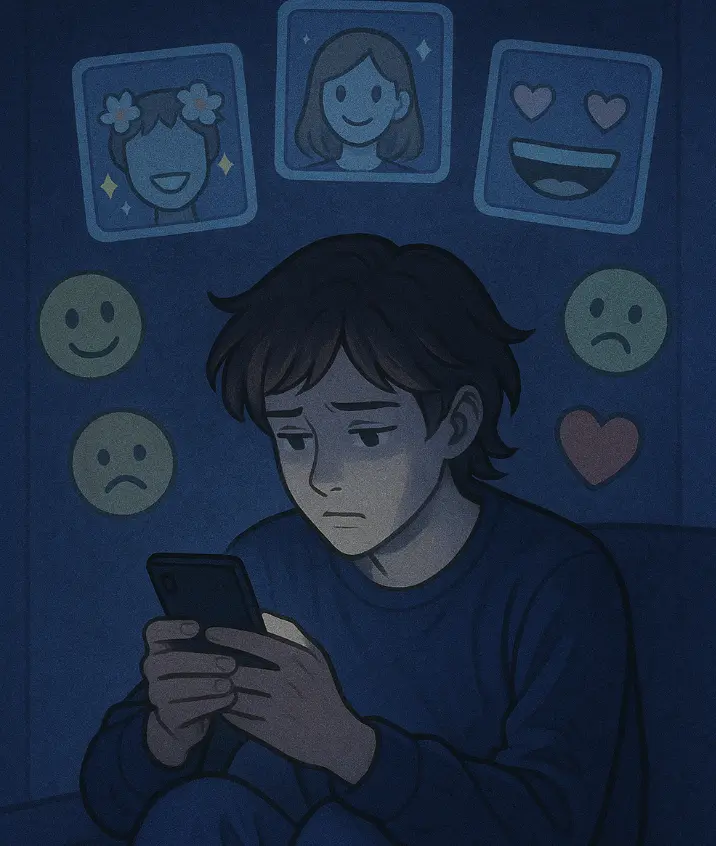
They begin to postpone their feelings—
activating the camera when sad, drafting posts when angry.
By the time everything is shared, replied to, and liked,
the notifications settle, and their emotions have already subsided.
Social media keeps everyone hyper-aware.
They know how to express themselves,
but in doing so, they gradually lose trust in their own feelings.
"Am I genuinely sad? Or do I merely want others to know I'm sad?"
Such doubts have become the new form of self-censorship.
Emotions become content, and honesty a technique.
No one merely experiences events anymore;
they continually ponder—can this be shared? Is this too real?
They profess to "live authentically,"
yet refine authenticity into something likable.
Ultimately, happiness needs framing, sadness filters,
and honesty editing.
Perhaps someday people will relearn silence.
Allowing some emotions to remain unshared,
certain pains to go uninterpreted, some moments solely theirs.
In such times, honesty may lack beauty but will regain warmth.
文章發布於