Learning Happiness with Zhuangzi


Translated by AI
It is often said that "in life, nine out of ten things are unsatisfactory," a phrase that captures the uncertainty and challenges of life. If one can maintain a calm heart amidst changes, happiness becomes a positive feedback loop of self-adjustment. Drawing from Zhuangzi's wisdom, we outline a path towards happiness that is more relatable to everyday life yet remains deeply inspiring from four perspectives.
Changing with the Times, Returning to Naturalness
Everything in the world is in constant flux: day alternates with night, seasons change. Zhuangzi’s "Dao follows nature" reminds us not to cling to fixed outcomes. When you attempt to force the universe or defy destiny, you often end up mentally and physically exhausted. Conversely, if you learn to go with the flow like falling leaves or float freely like clouds, you can reduce friction with reality.
- Small Exercise: When unexpected situations arise, try taking a deep breath, imagine yourself following a breeze — accepting its guidance without being fixated on any direction — and then decide your next step.
Adjusting Desires, Letting the Heart Be Content
Zhuangzi introduced the concept of "no dependence" — happiness does not rely on external perfection but rather internal contentment. The original sense of "dependence" includes waiting, relying on, or depending, which in this context can be seen as shackles that trap us in a fixed mindset of "must achieve" or "must become." Tying happiness to specific goals and outcomes inevitably leads to disappointment when results do not meet expectations. As Zhuangzi noted, if a tree always desires to become the perfect material for carving, it may end up being sawn off, losing the integrity of existence. But if it simply grows freely without trying to "become something," it can live in peace, enjoying sunlight and rain. This "free growth" is precisely the illustration of "no dependence." Setting flexible expectations for yourself can avoid disappointment and bring instant satisfaction in small achievements, living out "no dependence."
- Small Exercise: When completing a task, don’t rush to look at the results, but tell yourself, "This step is worth celebrating." Let satisfaction reside in the present rather than being tied up with the outcome.
Transcending Binary Oppositions, Letting Go of Distinctions
When facing setbacks, people often divide the world into binary oppositions of "success/failure" and "happiness/suffering." In "Qi Wu Lun," Zhuangzi points out that such artificial distinctions are actually "the artificiality of things." Only by letting go of the labels of "good/bad" can one maintain peace in any situation: neither arrogant due to favorable circumstances nor anxious due to adverse ones, thus making happiness a silent joy shared with all things.
- Small Exercise: When encountering something troubling, try not to label it as "bad" immediately, but ask yourself, "What other possibilities could there be in this situation?" Replace critical thinking with curiosity.
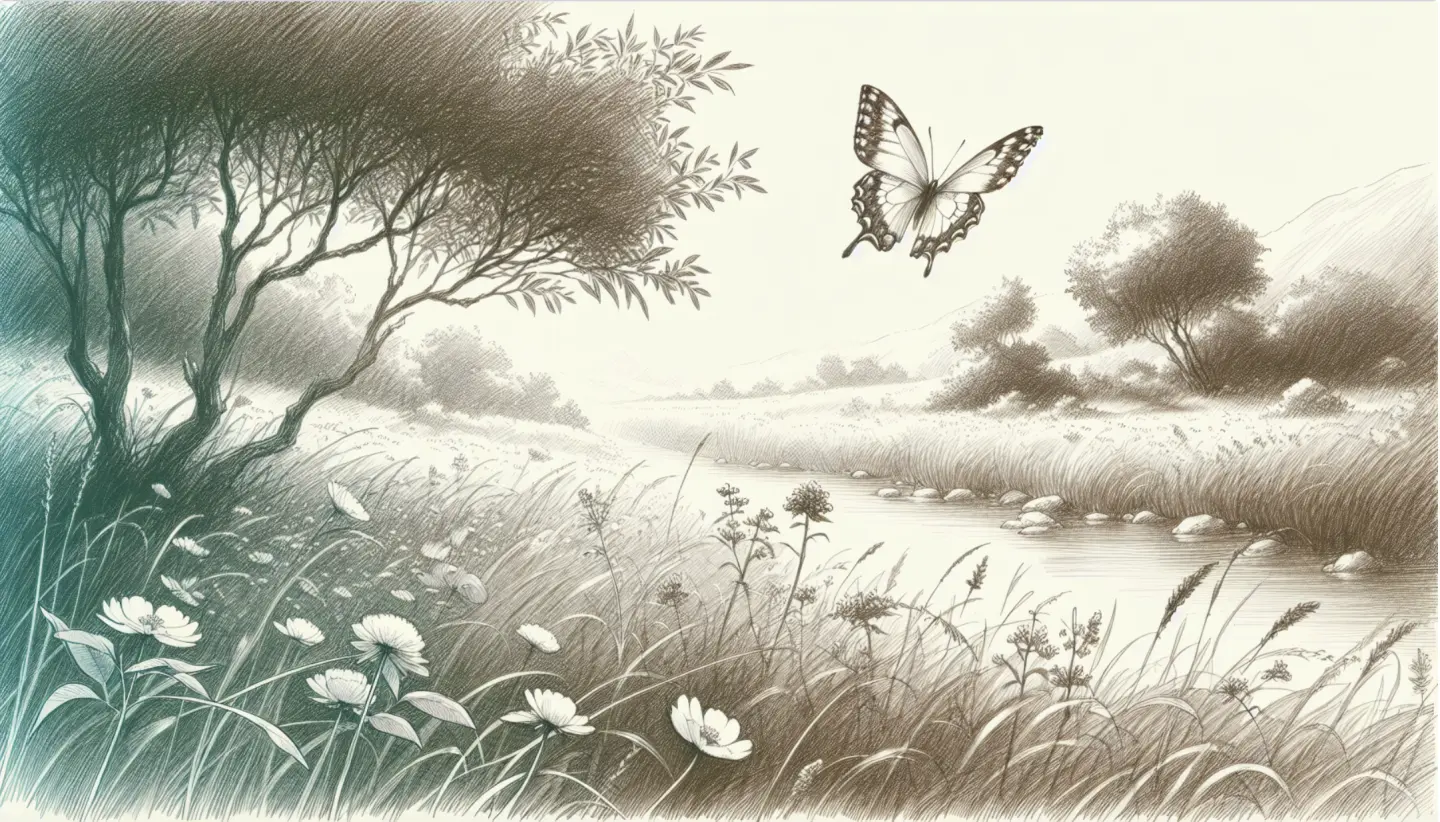
Dream of Butterflies, Freely Flying
Zhuangzi’s story of "dreaming of butterflies" tells us that being either "Zhuang Zhou" or "a butterfly" is merely a part of the mind. By placing yourself in the perspective of "a butterfly in a dream," you cease to struggle with the boundaries between reality and ideals, finding the freedom to flutter in each present moment.
- Small Exercise: Before sleeping each night, close your eyes for a minute and imagine yourself transformed into a butterfly, free from burdens, experiencing only lightness, leaving all worries behind.
Having experienced the transient nature of the world, you will find that happiness is often not a leap to great achievement, but those small, certain joys found in being flexible with changes, adjusting desires, not fixating on "black or white" outcomes, and achieving peace beyond distinctions. It’s not about pursuing dreams with difficulty, but rather the freedom found in "dreaming of butterflies," where every move becomes a light and graceful wing.
Ultimately, having experienced the clarity of "transcendence," we must return to the actions of "entering the world," so that we can ground that freedom in reality, turning peace and liberty into real happiness in daily life.
May you practice these four core principles in everyday life, where a tranquil heart can embrace all the flowing happiness. By being willing to adjust expectations and harmonize with the inherent "Dao," flowers of joy can bloom everywhere in ordinary days.
文章發布於